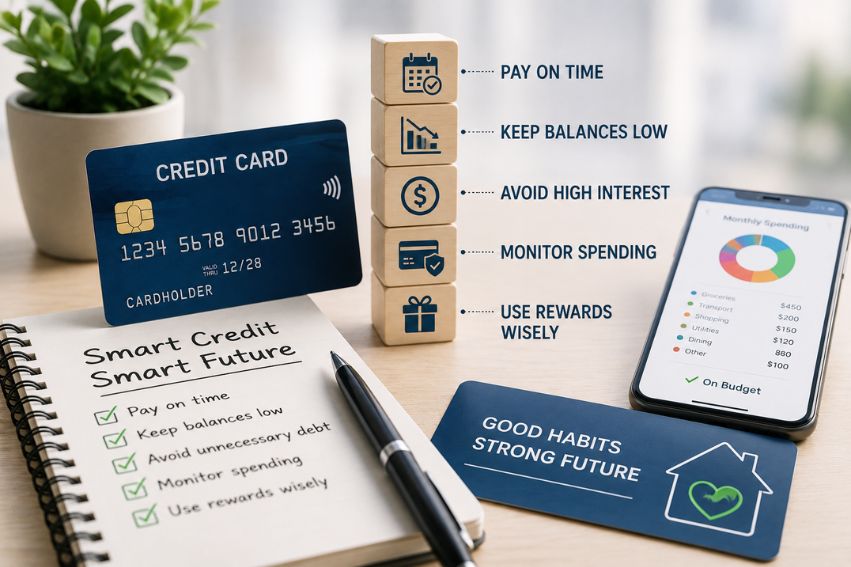
Credit cards can be a convenient financial tool when used responsibly. Developing good credit card habits can help you establish a strong credit history, maintain a healthy credit score, earn rewards, and manage everyday expenses more effectively.
However, using credit without proper planning can have the opposite effect. High balances, missed payments, and excessive debt can negatively affect your credit profile and may make it more challenging to qualify for a mortgage, personal loan, or other forms of financing.
Whether you’re building credit for the first time or preparing for a future home purchase, understanding how to manage your credit card properly can make a significant difference. This guide explains practical ways to use a credit card effectively, maintain good credit, and avoid common mistakes that could affect your future borrowing options.
Why Credit Card Management Matters
Many people think of a credit card as extra spending money, but it’s actually a form of borrowing.
Every time you use your credit card, you’re borrowing money from your credit card issuer. If you don’t repay the balance according to your card’s terms, interest charges may apply.
Responsible credit card use can help you:
- Build a positive credit history
- Improve your credit score
- Qualify for better borrowing options
- Earn cashback or travel rewards
- Manage cash flow more effectively
Good financial habits today can benefit you for years to come.
Understand How Your Credit Card Works
Before using your credit card, it’s important to understand the basics.
Every credit card includes:
- A credit limit
- A monthly statement
- A payment due date
- An interest rate (APR)
- Minimum payment requirements
Knowing these details helps you avoid unnecessary fees and interest charges.
Pay Your Balance on Time
One of the most important habits is paying your credit card bill on or before the due date.
Making payments on time can:
- Help build a positive payment history
- Protect your credit score
- Avoid late payment fees
- Reduce the risk of additional interest charges
Setting up automatic payments or calendar reminders can help ensure you never miss a payment.
Pay More Than the Minimum Payment
While your monthly statement may only require a minimum payment, paying only the minimum means it could take much longer to repay your balance and you’ll likely pay more in interest over time.
Whenever possible:
- Pay your full balance each month.
- If that’s not possible, pay as much as your budget allows.
- Reduce outstanding balances as quickly as possible.
Paying more than the minimum helps you become debt-free sooner.
Keep Your Credit Utilization Low
Credit utilization refers to how much of your available credit you’re using.
For example:
- Credit limit: $5,000
- Current balance: $1,000
Your credit utilization is 20%.
In general, keeping your utilization relatively low demonstrates responsible credit management.
Some tips include:
- Pay down balances regularly.
- Avoid maxing out your credit card.
- Spread purchases across multiple cards if appropriate.
- Make additional payments during the month if needed.
Responsible utilization can contribute to a healthier credit profile.
Avoid Unnecessary Purchases
Credit cards make spending easy, but convenience shouldn’t lead to impulse buying.
Before making a purchase, ask yourself:
- Do I actually need this?
- Can I comfortably pay it off?
- Is it within my monthly budget?
Using your credit card for planned purchases rather than impulse spending can help you stay in control of your finances.
Monitor Your Monthly Statements
Reviewing your credit card statements regularly helps you:
- Track spending
- Stay within budget
- Identify unauthorized transactions
- Catch billing errors early
Many financial institutions also offer mobile apps that allow you to monitor your account in real time.
Use Rewards Wisely
Many Canadian credit cards offer benefits such as:
- Cashback
- Travel rewards
- Airline points
- Grocery rewards
- Purchase protection
- Extended warranties
While rewards can be valuable, they should never encourage unnecessary spending.
Remember:
The best reward is avoiding unnecessary interest charges.
Avoid Cash Advances
Cash advances often come with:
- Higher interest rates
- Additional fees
- Interest charges that may begin immediately
Whenever possible, use alternative payment methods instead of taking cash advances from your credit card.
Protect Your Credit Score
Your credit score is an important part of your overall financial health.
Responsible credit card use can help maintain a strong credit profile.
Some good habits include:
- Paying bills on time
- Keeping balances manageable
- Avoiding frequent credit applications
- Maintaining older credit accounts when appropriate
- Checking your credit report periodically
A healthy credit score can improve your chances of qualifying for mortgages and other financial products.
Credit Card Mistakes to Avoid
Many people unintentionally damage their finances through poor credit card habits.
Common mistakes include:
- Missing payment deadlines
- Paying only the minimum payment every month
- Maxing out your available credit
- Opening multiple credit cards in a short period
- Ignoring monthly statements
- Using credit cards for everyday expenses without a repayment plan
- Carrying high-interest debt for extended periods
Avoiding these mistakes can help you maintain better financial stability.
How Credit Cards Can Affect Your Mortgage Application
If you’re planning to buy a home, your credit card habits matter.
Mortgage lenders often review:
- Payment history
- Outstanding balances
- Overall debt levels
- Credit score
- Credit utilization
Using your credit card responsibly may strengthen your mortgage application by demonstrating sound financial management.
Before applying for a mortgage, consider:
- Paying down high balances
- Avoiding new credit applications
- Continuing to make all payments on time
These steps can help present a stronger financial profile.
Tips for Responsible Credit Card Use
Developing healthy habits can make credit cards work in your favor.
Here are some practical tips:
- Create a monthly budget.
- Pay your balance on time.
- Pay more than the minimum whenever possible.
- Keep your credit utilization low.
- Monitor your account regularly.
- Avoid unnecessary debt.
- Review your credit report periodically.
- Use rewards strategically—not as a reason to overspend.
Small financial decisions today can lead to long-term financial success.
Thinking About Buying a Home?
Your credit profile plays an important role in the mortgage approval process.
If you’re planning to purchase a home, renew your mortgage, or refinance, we’re here to help. We’ll review your financial situation, explain your mortgage options, and help you prepare for a successful application.
Book your free mortgage consultation today and take the next step toward achieving your homeownership goals with confidence.